
http://photography.nationalgeographic.com/photography/photo-of-the-day/salt-marsh-aerial-virginia/
10:30am – Palace Round Room – Meeting minutes and summary. Transcript available upon request.
Attendees:
Emperor’s Defense Trust Head Secretary Jefferson Paine
Emperor’s Science Trust Head Secretary Nylam B. Sanford
Governor, Marshlands, Nehyr Pettrik
University of the Coast Professor Sal Caudata (fire salamander expert)
(Minutes taken by Mr. Sanford’s assistant, approved by Mr. Paine, Mr. Sanford)
Minutes:
10:31am – All arrived, Mr. Paine gaveled the meeting, Introductions
10:32am – Mr. Caudata gave brief overview of situation with FSD
10:35am – Mr. Paine outlined military history with salamander population
10:45am – Discussed action plan. Requires two-part approach. (1) understand disease mechanics, especially transmission (2) attempt to ease transmission and ease, halt, or reverse the effects of FSD that stop the salamanders from breathing fire. Governor Pettrik agreed to authorize state emergency funds to contribute to University team’s equipment & setup needs
11:27am – Mr. Paine agreed to update Emperor, adjourned meeting
Summary:
Called by Mr. Paine and Mr. Sanford, at the Emperor’s orders, to begin discussion of salamander “plague” in the coastal marshlands.
In the preceding 18 months, Mr Caudata and his team at the University have documented the widespread infection of the Fire Salamanders of the marshlands with a disease heretofore unknown to the salamander population. The disease will be referred to as FSD (Fire Salamander Disease) for the purposes of brevity in this summary. According to Mr Caudata’s research, the disease has infected at least 38% of the population of salamanders in the region. In that 38%, all have lost their fire-breathing ability, rendering them obsolete for their military defense purposes. Additionally, at least 1 in every 70 cases has resulted in death shortly after the salamander loses fire-breath.
The University has only allowed an exploratory study to this point, and no permission has yet been given to study any salamanders. Everything Mr. Caudata has come to understand to this point has been done entirely through observation. To fully understand the disease and its impact, he would need a significant amount of access to the creatures, including the healthy, the sick and the dead.
Mr. Paine outlined the current parameters of the salamander population. In short, there are about 3500 Fire Salamanders considered in contractual service to the Emperor in the marshlands. Their strategic purpose is entirely defensive. They live and roam in the marshlands, their natural habitat, without specific instruction or direction from the Emperor’s government. Naturally capable of breathing fire as an ambush-style feeding tactic, the salamanders were seen even in the days before the Empire as potentially valuable weapons in the military. They would only need to be domesticated. All such efforts failed, and there have been many over the centuries.
Despite proving impossible to domesticate, the fire salamanders have proven amenable to a certain amount of training in the wild through a long-standing program of prey introduction in the marshlands. (Mr. Caudata noted here that prey introduction could be the source of the original disease, though Mr. Paine insists the military only introduces animals from the approved species list.)
In exchange for the prey stocked for them (they will not eat carrion, nor any prey they have not caught through natural processes), the fire salamanders patrol the coastal marshlands. Historically, these were ideal landing spots for raiders from the Sea Nations. Marshes being unsuitable for human habitation, the raiders would land in the marsh and trek overland to the towns and villages on more solid ground nearby. Naturally nocturnal creatures, the fire salamanders were convinced to patrol at all hours. Their social structure is incredibly loose, being something well below the complex organization seen in primates, marine mammals, and other species. Still, Mr. Paine points out that random inspections of the area (normally done with balloon reconnaissance) rarely show gaps in the protection. Whatever system they use seems to cover the territory.
With the introduction of FSD, Mr. Caudata fears that the salamanders are in danger of being wiped out entirely. He requested a combined effort to combat the disease, selecting a particular stretch of marsh that’s more easily accessible to humans than most of the area. Mr. Paine and Mr. Sanford both agreed that a combined military and science force be put together and installed in the field as soon as possible. Mr. Sanford will provide equipment and staff support from the Science Trust, and all scientific machinations will be designed and operated by Mr Caudata, pending approval from the Emperor and the Science Trust. The Marshlands will commit at least 30% of the funds necessary for the University-led study. Governor Pettrik did not foresee issues with this amount, and his staff with liase with the Science Trust. All engagement with the fire salamanders, including any tagging or tests done on live creatures and the retrieval of any corpses for study will be handled exclusively by trained members of the Military Trust.
Mr. Paine and Mr. Sanford agreed to a weekly update communiqué from Mr. Caudata once the operation is in place. All agreed studies should begin straight away to determine the best course of action to save the salamander population, both for the natural preservation we owe the salamanders and for their strategic military role in defending the coast from the raid-happy Sea Nations.
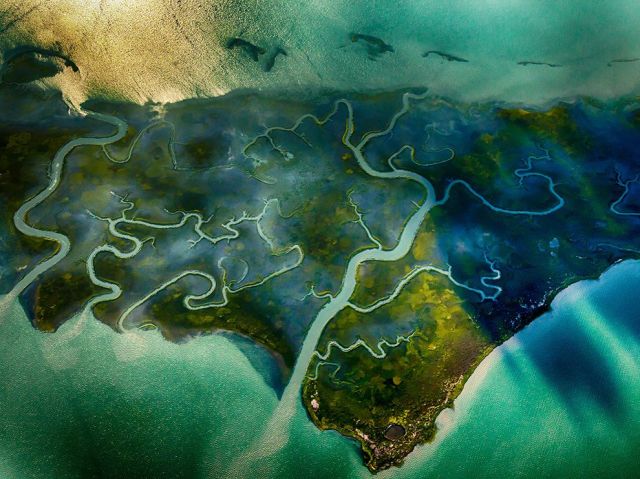
Below is an excerpt from the transcript concerning the location selected for the study.
Caudata: We had so few options to begin with. But this is an ideal location.
Paine: We estimate somewhere between 180 and 240 salamanders patrol this particular stretch of marsh in a given month. The two larger-
Pettrik: I’m sorry, fellas. What am I looking at?
Caudata: Apologies, Governor. I keep forgetting you’re newer to this discussion than the rest of us.
Pettrik: That’s alright. This is south of the capital?
Caudata: Yes, sir. About forty miles.
Paine: The map was originally drawn from a balloon team over the course of a six hour flight. This was (flips through his notes) six days ago.
Sanford: We had one of our best cartographers touch it up to look more true-to-life with the lines, colors and so forth.
Pettrik: It’s incredible. It looks almost real.
Paine: That was our intention. Gaudata.
Gaudata: So this area is very remote. Ideal landing spot for the Sea Nation raiders. You can see the remains of an old fort here, at the bottom. The ground here is much more solid than in most of the marshland. The smaller waterways tend to meander with regularity, but these two larger are fairly consistent. They can offer the Military reliable access to the interior when seeking out the salamanders.
Paine: The plan is to put Gaudata’s tents and equipment inside the old fort foundation. Barracks up the north coast, defensive encampments at the south and north ends. And we’ll get twice daily patrols from warships half a click out.
Pettrik: Do we need that much protection? The salamanders are on our side.
Sanford: Right, but there’s less of them.
Pettrik: You think the Sea Nations will start raiding again immediately?
Paine: No, but this is a vital endeavor, for both the Military and Science trusts. We can’t take chances.
Gaudata: We anticipate the study will take five weeks, during which time I intend to study at least forty living salamanders, half living and half infected. How many dead specimens we can locate and study is too difficult to estimate.
Sanford: We want the fewest possible, of course.
Pettrik: But you don’t anticipate that?
Gaudata (head shaking): I’m afraid not, sir. These kinds of things… get worse before they get better. Until we know what this disease is and why it’s shutting down the salamanders’ fire-breath glands, there’s no reason to suspect it will improve.
(Full transcript available upon request)
 The Tall Tale Year