
http://photography.nationalgeographic.com/photography/photo-of-the-day/flamingo-aerial-flock-india/
Southern State – DeLayon’s Guide Book
Section 5: Day Trip Excursions
Flamingo Lake
Flamingo Lake is a must-see for any traveler interested in local wildlife. Located eight miles east of the town of Bonse are huge mud flats. In the dry winter, these are barren and uninteresting. In the summer, after the storms have flooded the low-lying flats, they teem with life. Bloated rivers spill into the flatlands and create a series of shallow, warm water lakes. Tiny fish fill the multiverse of lakes and streams in this part of the country.
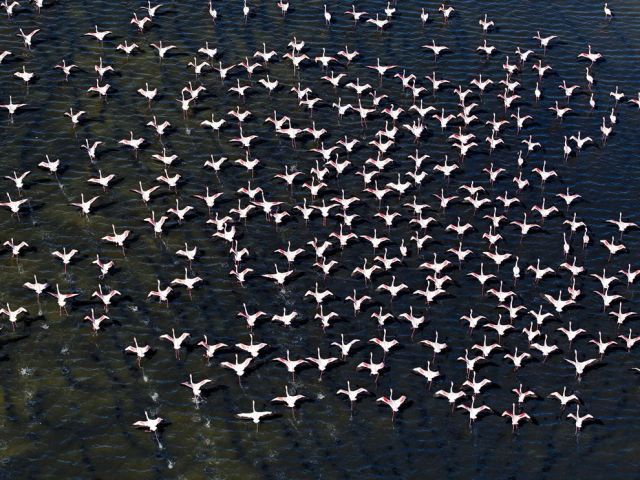
The enormous schools of little fish draw huge flocks of flamingos every summer. The pink birds fill the lakes and feast on the endless supply of food.
The county runs a few viewing platforms set up at an approved distance to avoid disturbing the flamingos. There’s a $5 fee to access the deck-like platforms, and binoculars are available for use with every entry purchased. It’s a nice stop for any bird lovers, but it’s only really eventful for a few days at winter’s end.
In the grassy patches between these seasonal lakes, little creatures known as Icarus Flies breed once a year before dying off. When the eggs hatch, swarms of the little vampires erupt onto the area lakes. Local birds are their sole source of sustenance. The Icarus Flies are the only animals in the world that feed on flight.
Interestingly, the Icarus Flies aren’t flies at all. In fact, they aren’t even insects. Rather, they are very small mammals closely related to bats. None are large enough to see from the viewing platforms, but they have an enormous effect on the area’s wildlife, both bird and non-bird alike.
Scientists have been studying the tiny creatures for decades, and still very little is understood about them. The beasts operate much like vampire bats, except that when they latch onto a host, it is not to suck blood. Instead, they consume the bird’s ability to fly. How they eat flight, how it’s processed into a food source, even the species evolutionary trail all remain mysteries. For the flamingos that feed here, the historical significance of the Icarus Flies is probably not of great concern.
Once the eggs hatch, the flamingoes undergo a massive exodus. They abandon each lake in droves, hop between the patches of water across a huge swath of these wetlands. Over the course of a few days, they’ll attempt local escape from the flies. When it invariably fails, the flocks take off for good to begin their flight north to their winter breeding grounds.
Other wildlife in the area comes out as the Icarus Flies drain the flight from the lanky birds. Cougars and bobcats can be seen stalking the tall grass, waiting to spot a flightless flamingo in the shallow water. They make for easy prey. These hunting cats can put on a quite a show from the viewing platforms.
Most excitingly, these seasonal lakes are home to a growing population of Red Wolves. Declared extinct in the wild decades ago, a re-introduction program in this area has been help immensely by the unfortunate avian victims of the Icarus Flies. Flamingoes stricken by the swarms provide easy kills for younger members of the packs. Adolescents gain valuable hunting experience and nutrition from the flamingos.
Off Route 17 about two miles north of the entrance to the viewing platforms is a small zoo. Caretakers here have saved a handful of flightless flamingos. There are daily talks with the zoo’s bird expert. There are two other exhibits at the small complex; one for local songbirds, the other for raptors such as osprey and red hawks. It’s a $10 admission and worth a stop for any visiting bird enthusiasts.
 The Tall Tale Year