February 24 – A Lifelane

Feb 24 myanmar-people-morning-cattle_88363_990x742

http://photography.nationalgeographic.com/photography/photo-of-the-day/myanmar-people-morning-cattle/

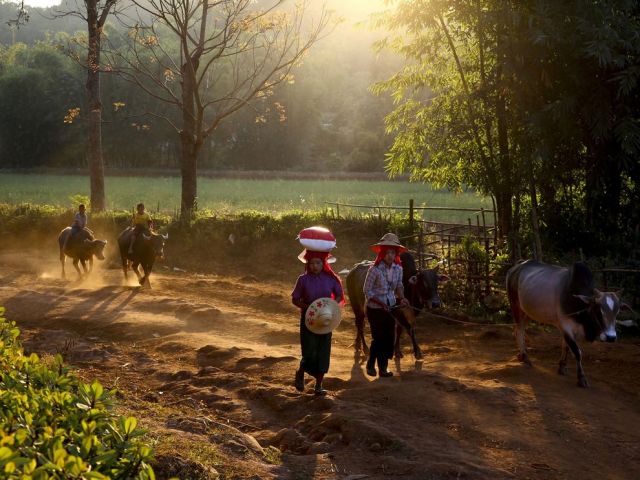
Morning sun warms the only calm we’ll see today. Quickly, we gather up the children. They move sluggishly until we promise them they can ride the cattle. That inspires some welcome pace from the young rascals.

The road is our only lifeline all the way out here. The ocean is hundreds of miles away. Our rivers are small which makes them ideal for drinking water, bad for travel. From farm to farm, for weddings and funerals, the road is our conduit and our keeper. And there is nothing I love more than the road in the morning.
Continue reading

February 23 – The Luckiest Pet in the World

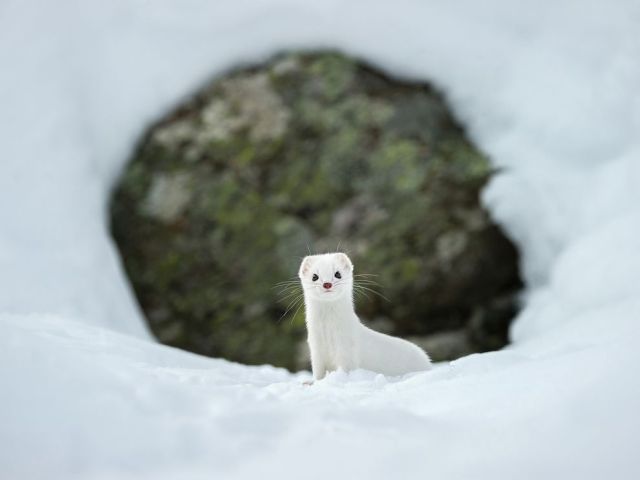
Feb 23 ermine-gran-paradiso-unterthiner_88358_990x742

http://photography.nationalgeographic.com/photography/photo-of-the-day/ermine-gran-paradiso-unterthiner/

Sturdy wooden wheels clunked over the snow-swept road. It was preceded and followed by the softened thump of hundreds of hooves and feet stomping on the powdery path. A half mile of road was covered by the king’s convoy. He was traveling home after a successful trade negotiation with the people of the Seaside Empire. Despite the weather, the mood of the entourage burned warm and pleasant. In a few days, they would be welcomed back with hearty congratulations for a job well done.

In the King’s coach, his Highness quietly read a book. It was one of his favorites from his youth spent abroad. It revolved around a central moral question posed by a magician whose talent was overwhelmed by his ambition. Though the King did not consider himself a superstitious man, he always read this book when he returned from a successful campaign abroad.

On the opposite seat, a duke looked out the window at the passing of the world draped in white. His expertise on the history of the Seaside Empire had been enormously important in the negotiations. More reward awaited him back at the capital, but the first honor was a seat in the royal coach with no one else but the King himself.

Continue reading

February 22 – The Summiteer

Feb 22 tyrolean-alps-hike-adventure_88365_990x742

http://photography.nationalgeographic.com/photography/photo-of-the-day/tyrolean-alps-hike-adventure/

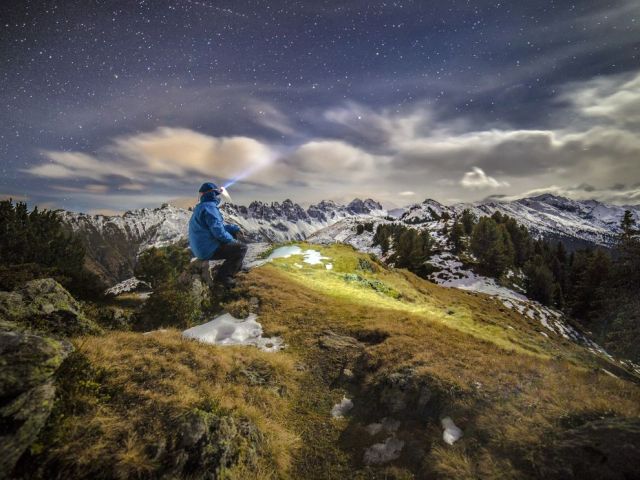
At the mountain’s base, there is a town huddled among the spires of the regal pines. The people in town work hard, and they honor the gods of the water and the land and the sky. For as long as there has been a town in this place, there has been one of their number singled out for special duty. This was the Summiteer.

At the mountain’s peak, the Summiteer can read slivers of the future. In their wisdom, the gods of water and land and sky left clues in the stars, hints as to what may come. When the wolves swept across the land, the gods left instructions on how to safely negotiate with their diplomats and avoid a fight. During the droughts, the gods gave hints on how to make what water they had last.

Continue reading

February 21 – The Firefly Waltz (Dancing in the Almost Dark)

Feb 21 fireflies-night-tennessee-liittschwager_88359_990x742

http://photography.nationalgeographic.com/photography/photo-of-the-day/fireflies-night-tennessee-liittschwager/

One week earlier, the first fireflies began to drift into the unremarkable patch of forest. They meandered with haphazard progress over the green grass and fallen leaves and rotting stumps. And yet they moved with uncharacteristic purpose, gathering at the start of a vague slope upward.

Six days passed, and more fireflies poured into the area. By day they slept, recharging, awaiting the arrival of their brethren. By night, they bobbed around the small copse, feasting on the pollen and nectar from the last of the spring’s flowers.

In the afternoon on the seventh day, the muted crunch of boots rang off the trees. A father and his son hiked up a low rise and into the area. Each was burdened with a sizeable pack. The father paused and assessed the area at the bottom of the slope. Eventually, he pointed to a spot just beside an old tree stump.

Continue reading

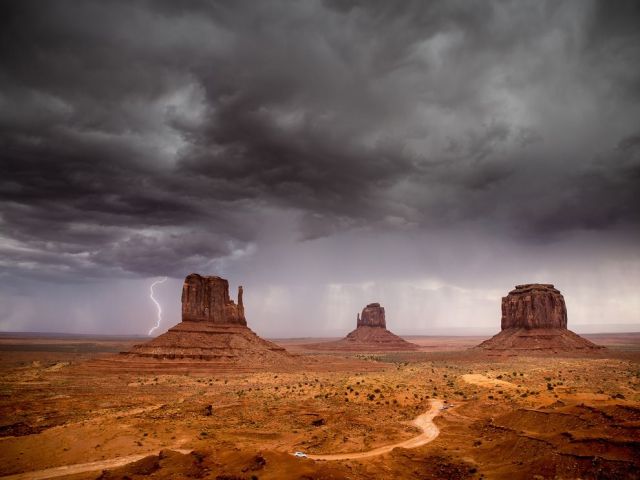
February 20 – People of the Storm

Feb 20 monument-valley-storm-arizona_88362_990x742

http://photography.nationalgeographic.com/photography/photo-of-the-day/monument-valley-storm-arizona/

It wasn’t a big crowd, but then it never had been. Three trucks were huddled along the side of the makeshift road.  Several people milled about. Obviously this was not the most accessible place on earth, and carpooling just made good sense. Someone had thought to throw a cooler in the back of one of the pickups.

They’d gathered a few hours earlier, but it had taken years to assemble. Each had done research individually which had led, inevitably, to them meeting each other. Some had interviewed local folklorists. Some had braved the web of illogic that supports the internet’s conspiracy theory message boards. Others had followed notes in old books, whispers in old songs, memories they were certain did not belong to them.

Continue reading

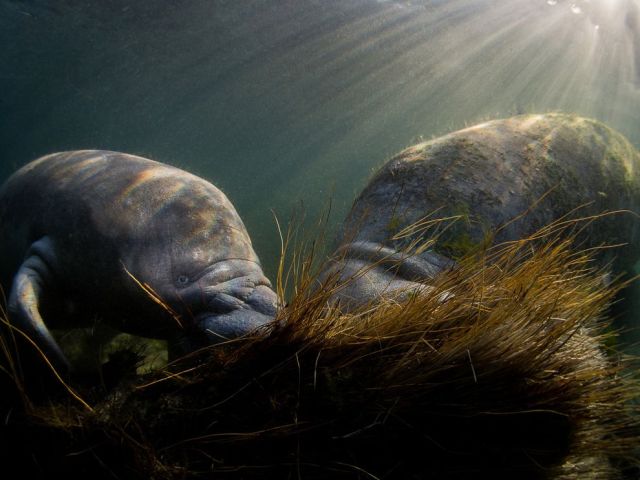
February 19 – Manateevesdropping

Feb 19 manatee-crystal-river-underwater_88361_990x742

http://photography.nationalgeographic.com/photography/photo-of-the-day/manatee-crystal-river-underwater/

A large boat, too large for the small bay, floated at anchor just out of earshot from the mangrove-lined shore. It was a pleasure craft, two stories of posh inner cabin and a flat deck on the stern. An array of high-tech geared decorated the crow’s nest roof. Guards were posted fore and aft. They were dressed like any deckhands might be in expensive Italian suits with their handguns only partially hidden. In the crow’s nest, the captain received a ping. Something approached. He radioed down to the inner cabin.

“They’re just around the corner,” the speaker next to the leather couch squawked. Cage, world-renowned arms dealer, looked at his assistant and nodded.

Continue reading

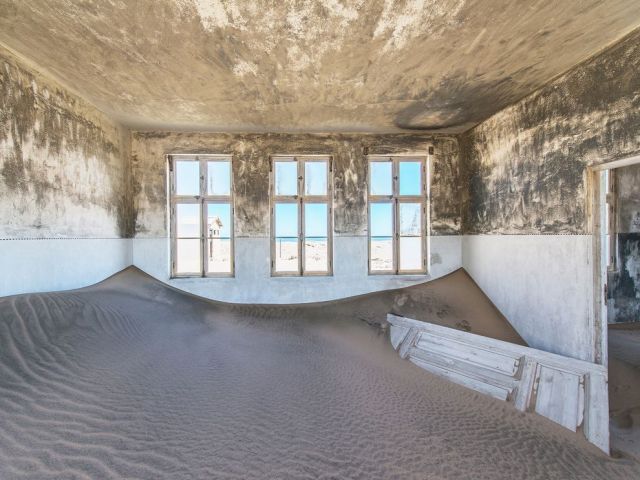
February 18 – Hidden in a House of Sand

Feb 18 - namibia-pomona-kolmanskop-sands_88571_990x742

http://photography.nationalgeographic.com/photography/photo-of-the-day/namibia-pomona-kolmanskop-sands/

On her first trip to the house, she had brought nothing and, to her dismay, found nothing. She felt betrayed. Her information had come from reliable sources. She’d done her due diligence and confirmed from two sources; one human, one not. Both had supplied her with the same location. Surely, this must be the place.

And yet here was a house abandoned. Sand rolled through the emptied rooms. Some doors were missing, perhaps carried off by looters. Others sat half buried in the sand in an analog of her current plan that she felt was discomfitingly accurate. With care, she searched the house. She walked outside, and found a long pole in a nearby shed. She returned to the house and poked down into the sand in the living room corner, under the foyer’s dangling, rusted chandelier, even into the drifts that had filled the open oven.

Continue reading

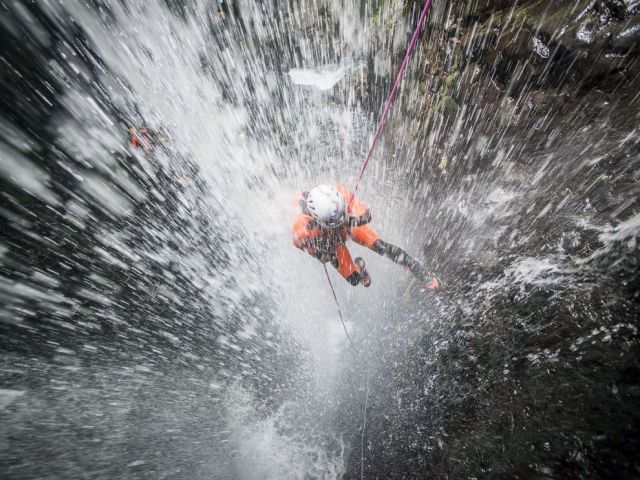
February 17 – The Fountain of Youth is Real If Inaccurately Named

Feb 17 - waterfall-rappelling-adventure-indonesia_88366_990x742

http://photography.nationalgeographic.com/photography/photo-of-the-day/waterfall-canyoning-adventure-indonesia/

There was a woman whose husband had recently asked for a divorce
And she was sure the trouble began with the scar she got on her face
The story was not a memorable one, she lamented
It had not happened during some grand adventure
At the hands of a nefarious villain
Or from the tip of a famous, named sword

Continue reading

February 16 – Ovis Aries Polyphemus

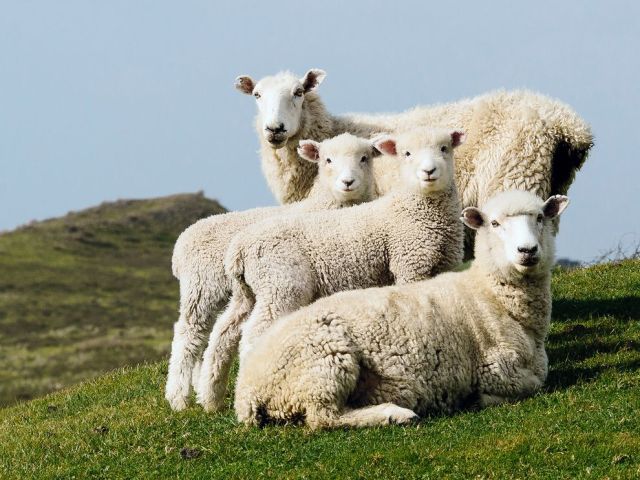
Feb 16 - sheep-portrait-new-zealand_88364_990x742

http://photography.nationalgeographic.com/photography/photo-of-the-day/sheep-portrait-new-zealand/

Encyclopedia Fauna – S
Entry 14.1 – Apparition Sheep
Scientific name: Ovis Aries Polyphemus

Synopsis: A subspecies of the standard domesticated sheep, the Apparition Sheep is not a breed of the standard ovis aries despite a great deal of debate in the 20th century on the subject. The advent and application of genetic sequencing has unequivocally proven the Apparition Sheep are their own subspecies, dubbed ovis aries polyphemus by Dr. M.G. Venit who ran the initial genome sequencing.

Their evolutionary history, diet, individual and flock behavior as well as their reproductive patterns are nearly identical to their parent species, ovis aries, and will not be repeated here. You can refer to the previous entry (S-14) for that information.

Continue reading

February 15 – Exploring a Blank World

Feb 15 - reflection-salt-desert-bolivia_88465_990x742

http://photography.nationalgeographic.com/photography/photo-of-the-day/reflection-salt-desert-bolivia/

Blue skies streaked with the occasional cloud blemish ran to the horizon in every direction. Tires rolled with a low hum across the pristine, flat ground. Days from the IPT gate and they had seen nothing of note. It was two trucks, five people, and their own reflections off the strange ground that never ended.

“I was sure she liked me,” Galon said. He slouched in the passenger seat of the lead truck, feet hanging out the window. All around him, screens spit out the same dull information about air quality, temperature, ground composition, and a host of other data that told them the same thing – there was nothing here.

Continue reading